
Naureen Fatema
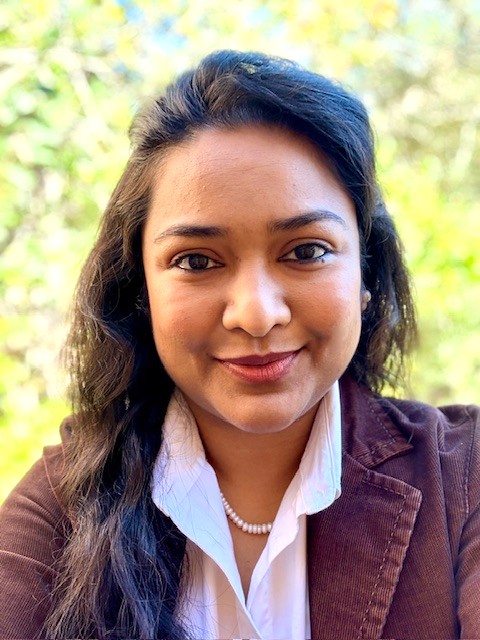
Assistant Research Scientist, Department of Agricultural Economics, Texas A&M University
Program Manager, Program on Conflict and Development, Department of Agricultural Economics, Texas A&M University
Dr. Naureen Fatema is an applied economist with over a decade of experience in development research and practice. As a research scientist in the Department of Agricultural Economics at Texas A&M University, she leads research on land rights, food security, climate resilience, migration and threats to households in fragile and conflict-prone regions. Her work integrates rigorous econometric analysis with field-based insights, contributing to peer-reviewed publications and policy briefs that inform national and global development strategies.
In her role as Program Manager for the Program on Conflict and Development, Dr. Fatema advances the program’s mission to generate actionable research for promoting peace and prosperity. She leads efforts to secure federal research funding, build strategic partnerships, and support grant development. She advises on methodology and program design, mentors emerging scholars, and co-authors academic publications and policy outputs. Her recent policy brief on global food security and U.S. national security was presented to the U.S. House of Representatives, Foreign Affairs Committee, World Food Prize, IFAMA, and COP28. Her work bridges academic institutions, donor agencies, and policy think tanks to address urgent challenges in conflict, disaster-prone, and climate-vulnerable regions.
Dr. Fatema’s career spans partnerships with organizations such as the World Bank, United Nations, International Federation of Red Cross and Red Crescent Societies (IFRC), the United States Agency for International Development (USAID) and many other development and academic institutions across Sub-Saharan Africa, South and Southeast Asia, and the Americas. Over the years, her research and advocacy have supported marginalized communities, advanced gender equity, and contributed to policy reforms in fragile settings. For example, her work has informed USAID’s Feed the Future Mali initiative, resilience programming in the Democratic Republic of Congo, climate adaptation training in Egypt and natural disaster risk reduction and climate change adaptation programming in South Asia. She has designed and delivered graduate-level training on climate change economics and policy at Texas A&M University and managed large undergraduate courses in microeconomics and development at McGill University.
With a career rooted in both research and practice, Dr. Fatema brings a global perspective shaped by fieldwork in diverse cultural and geographic contexts. Her work supports policy institutions and academic communities seeking to understand and respond to the complex drivers of fragility, and to design evidence-based interventions that promote peace, stability, and resilience.

